

Artist Focus: Crawler (Zohar & Castle) ft. Gervaise
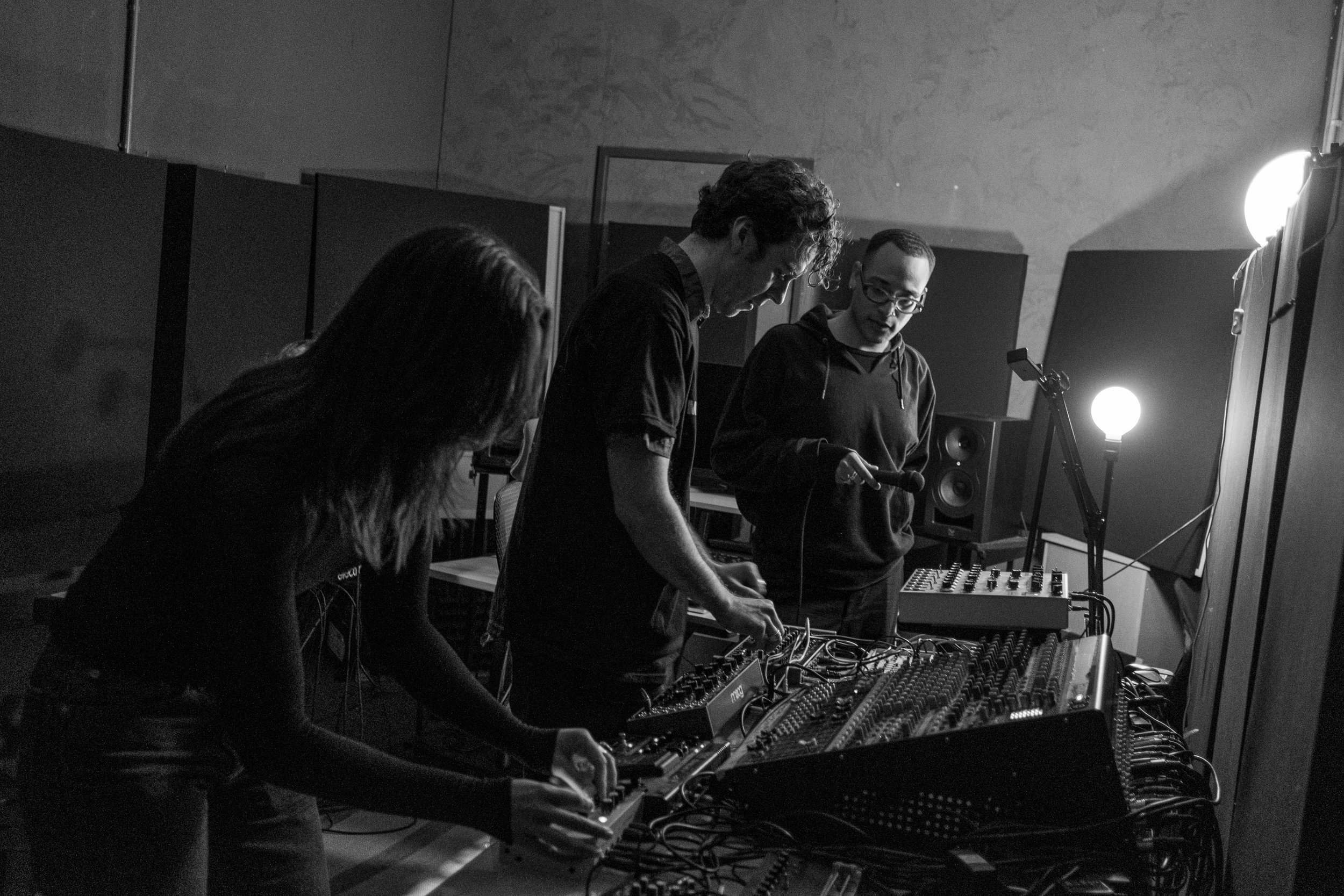
On Saturday May 30th, Zohar and Harry Castle come together as Crawler. In collaboration with writer gervaise alexis savvias, they present a new immersive live performance simultaneously functioning as a listening space and a sound experiment.
Ahead of their appearance at FIBER Festival 2026, we spoke about collaboration, heavy sounds, and heavy feelings.
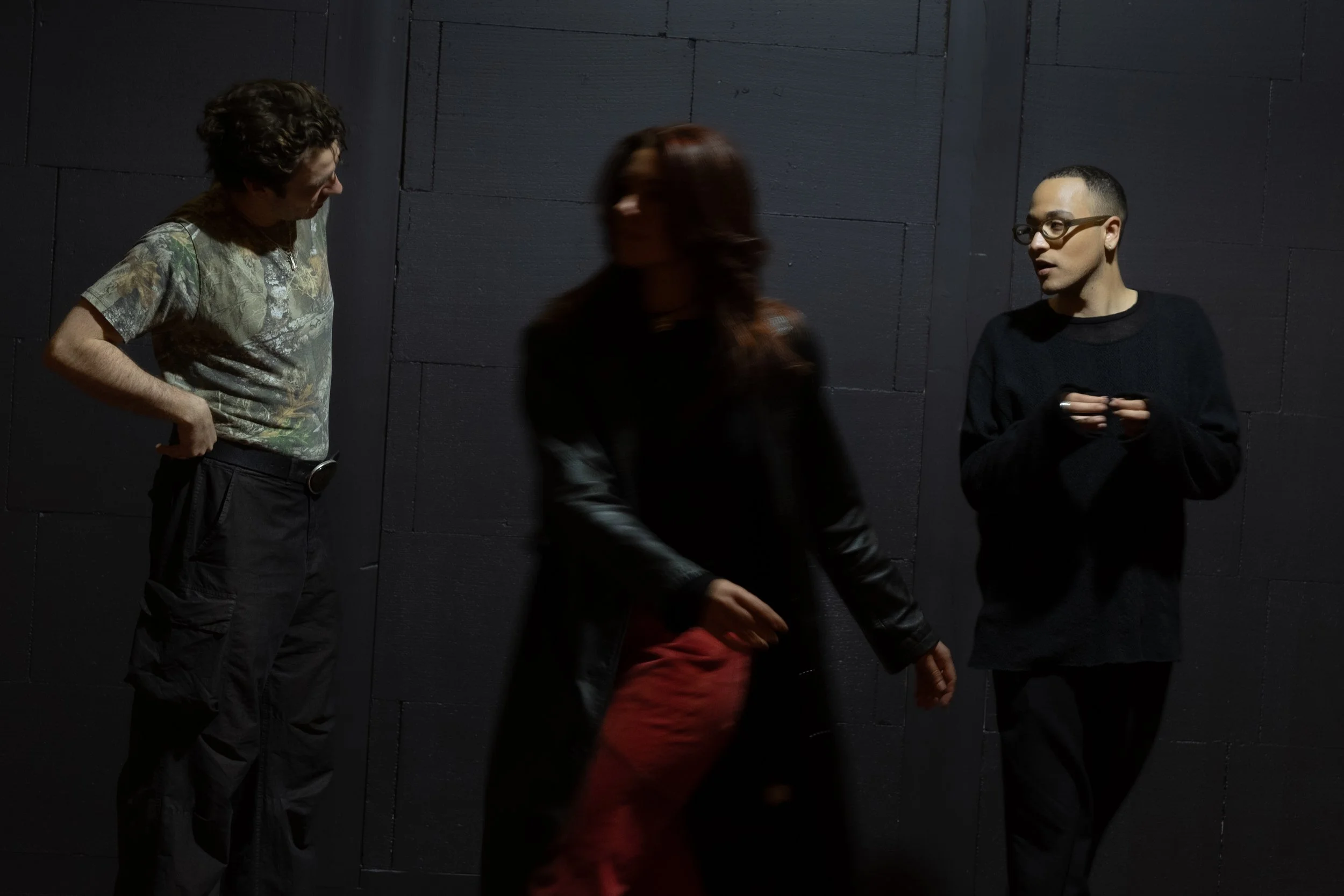
Photo: Marieke de Graaf.
Your practice moves between performance, club culture, and sound art, engaging with both the physical and the affective. How did Crawler first emerge and what drew you to build spaces like these together?
Castle: Crawler emerged from a shared feeling that sound can do more than simply be heard. It moves through the body, holds emotion, creates tension, and offers a focused encounter with the world around us. Rachella and I have both spent a lot of time between club culture, performance, and sound art. The project grew from wanting to bring those worlds together with real intention.
We were not interested in music as pure escape. We wanted to build something physical and affective, something that carries an opinion, a mood, a pressure. That felt important from the beginning.
Zohar: Harry and I have been moving through similar scenes for a while. We kept seeing each other at events where there was a shared love for music, but also for the communities and ideas around it. I saw Harry perform with Barros as Wraith in the Thomas Kerk last year, and I knew I wanted to explore what a collaboration might look like.
When we finally spent a day in the studio together, it was clear very quickly that something was there. The sound arrived naturally. We had similar references, but different ways of approaching them, and that fusion felt alive.
From that very first session, Crawler became a way to build a space together: heavy, intimate, unstable. It sits between the dancefloor and a listening environment, between pressure and vulnerability, with room for both intensity and play / experimentation.
“Crawler became a way to build a space together: heavy, intimate, unstable. It sits between the dancefloor and a listening environment, between pressure and vulnerability, with room for both intensity and play / experimentation.”
Your work is built entirely through hardware-based systems, where feedback and sub-bass unfold in real time. What made you choose this medium and how does it shape your performances?
Castle: We are both interested in the histories and legacies that underpin club music: industrial, dub, sound system culture, techno, and the politics of bodies gathering around sound. We wanted to make something that brought those threads together without smoothening them out.
Working fully with hardware gives the music immediacy. There is no screen between you and the sound. You are making decisions with your hands, riding faders, pushing feedback, opening filters, listening to the room respond. The performance feels less like playback, and more like a live negotiation or conversation with the machine.
Zohar: For me, this is the first time working completely analogue in this way. I had been trying to find a live format for my own work through Ableton, but it never felt fully natural. With Crawler, the limitation of the setup became freeing.
There are only a certain number of instruments, cables, hands, and choices. Inside that limitation, there is a lot of space to move. Experimentation feels direct. You hear the consequences immediately, and you respond to them immediately.
The analogue system keeps risk inside the performance. Things drift, distort, overload, or suddenly open up. That is part of the attraction. The set is shaped by happy accidents, but also by close listening and control. The energy is always at your fingertips.
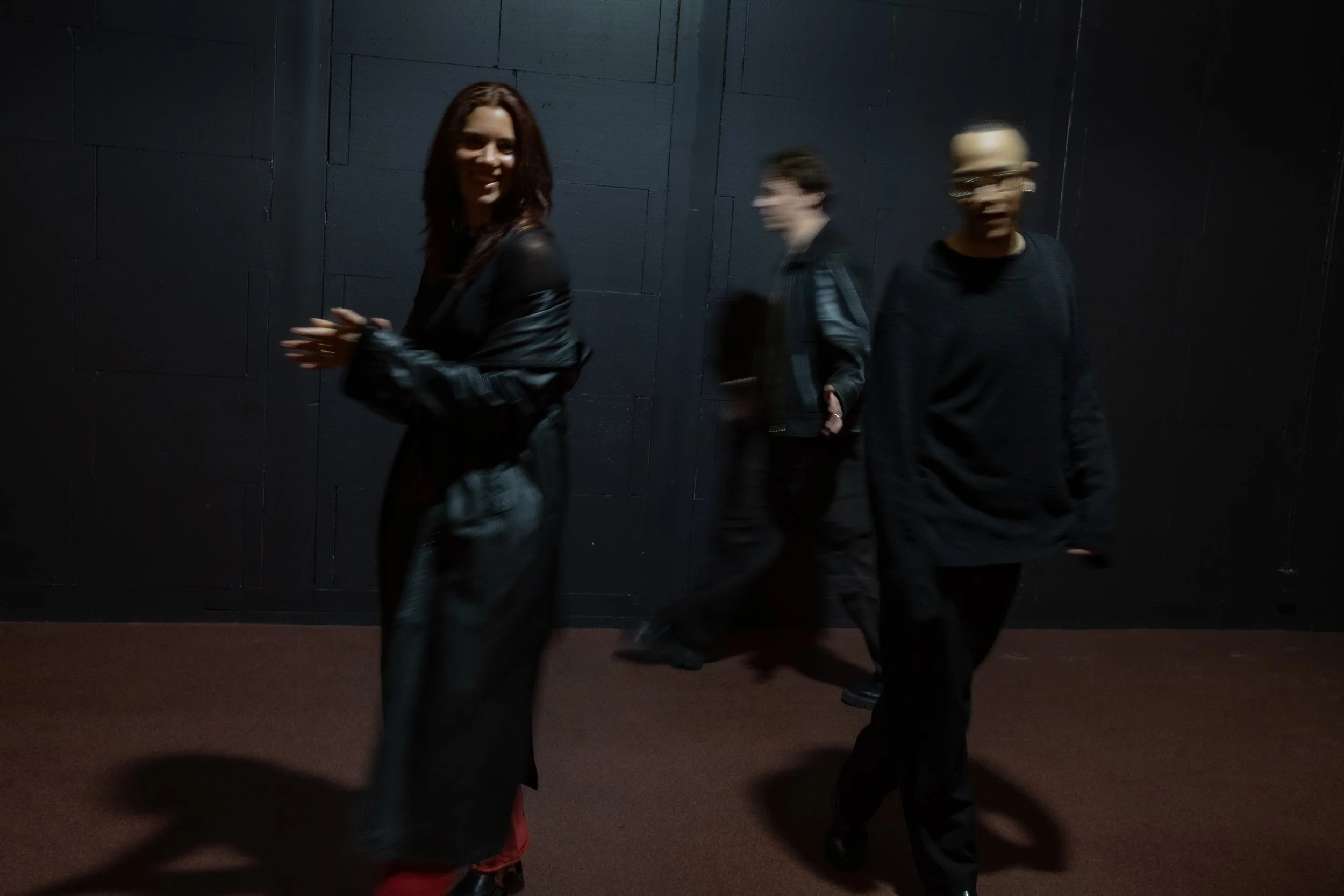
Photo: Marieke de Graaf.
A Sound Experiment brings together Crawler's dense sonic environments with the work of writer and artist, Gervaise. What sparked this collaboration, and what is each of you bringing into the project?
Castle: The collaboration with Gervaise began in a similar way to the collaboration between Rachella and myself: through shared spaces, shared events, and a shared investment in the cultures that surround music. Gervaise was someone we kept encountering through mutual friends, on nights out, who was equally curious about sound, dancefloor subcultures, and the interaction between language and sound.
At a sound system night at De Sering, I was talking with a friend about this new project with Rachella. Gervaise overheard and mentioned they had lyrics and poetry they wanted to send us. It was perfect. Within two days we had made our first track together, "Longing", which will be part of our first album.
Zohar: We had always imagined Crawler with voice, but only if the voice could belong inside the sound. It could not feel like something placed on top. When Harry sent me the first track with Gervaise layered on it, I was away in Bucharest. I understood straight away why he had said, "I found the right voice."
Gervaise's voice made the atmosphere and tapestry of the track feel that much more complete. It brought language, breath, and presence into the density, without taking away from the physical force of the music. That is the place we are working from in A Sound Experiment: voice, sub-bass, feedback, and bodies occupying the same space.
Gervaise: The story of how our collaboration came to be is always a joy to tell – I often refer to it as one of my favourite ‘chance encounters’ in the city. The timing was uncanny, though, as approaching my voice as an instrument, and recording my poetry is something that I’ve only recently started leaning into. I’m really honoured that my words found their way onto Crawler’s first album as a result of a simple chat amongst friends in the smoking area.
To that end, our studio sessions together thus far have pushed me to dive even further into the themes I juggle in my other writing and artistic projects, namely: desire, the pitfalls of language, blackness, grief, hauntology. It’s a real joy to be able to synthesise my words alongside the raw, sonic atmospheres that Harry and Rachella are building.
“The audience is not separate from the work….. We want people to feel close to the sound, close to us, and close to each other.”
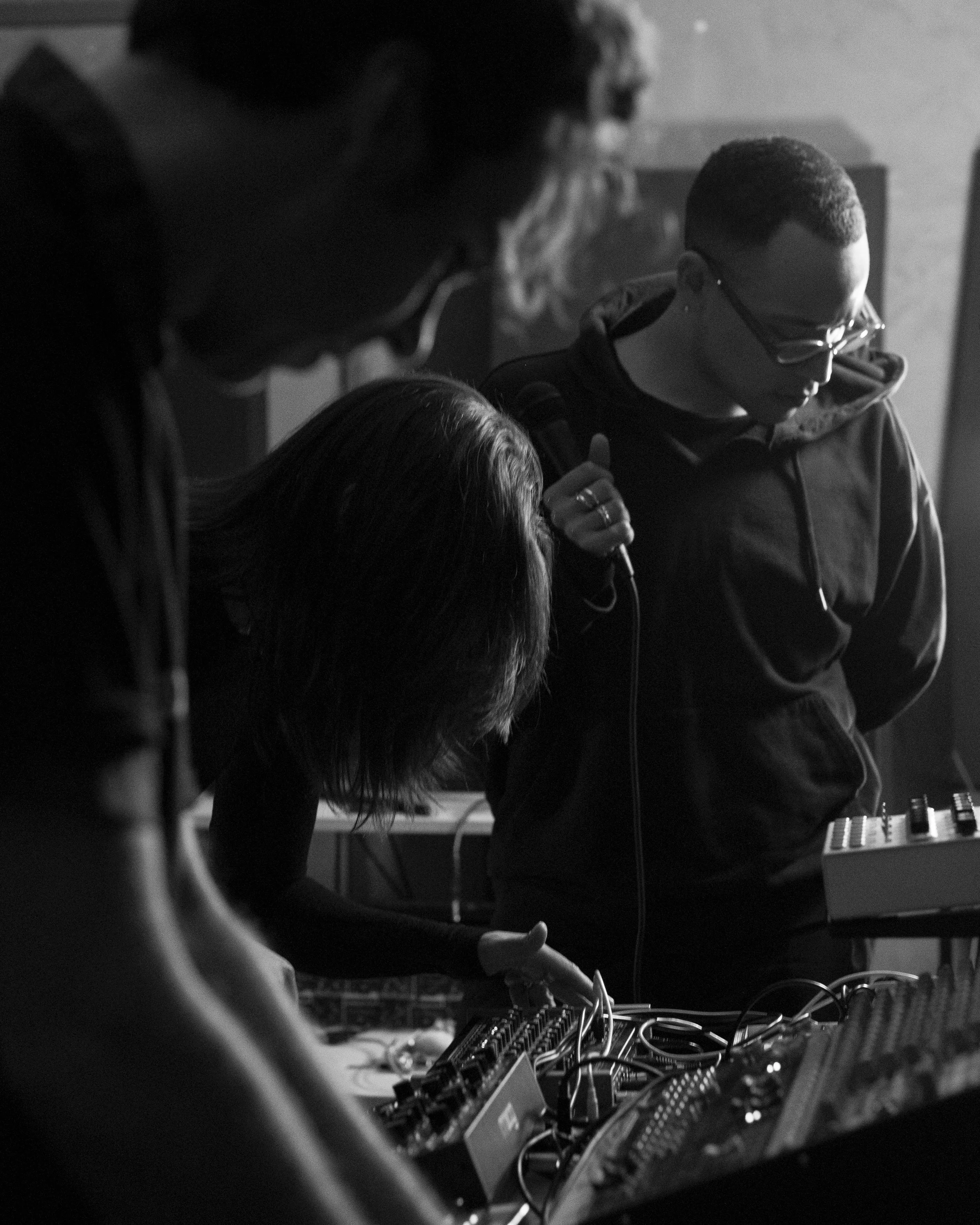
Photo: Marieke de Graaf.
Being described as both a live set and a listening environment, what kind of atmosphere are you hoping to create for the audience in A Sound Experiment?
Zohar: We want the audience to enter something rather than watch something. A Sound Experiment is a live set, but it is also a room we are building in real time: floor-level, physical, intimate, and charged.
Castle: I mean, who doesn’t love live analogue electronics: machines, cables, feedback, sub-bass, and hands moving across the mixer? But the gear is not the point. The system is there to create an atmosphere where sound becomes bodily and emotional; where a voice appears from inside the room, and where the line between performer, listener, and space starts to blur.
We don’t want Crawler to feel like another experimental music project passing through the circuit. We want it to speak to what it feels like to be alive now: the difficulty, the pressure, the tenderness, the confusion, the need for collective spaces. The sound is heavy, because those feelings are heavy.
Zohar: We’re also approaching it openly as an experiment. In the studio, whether it is just the two of us, or the three of us with Gervaise, we play and riff off each other for extended periods of time, and new dimensions always appear. FIBER gives us a chance to translate that process into a setting with an audience inside it.
The audience is not separate from the work. Their presence changes the room, and we are interested in that exchange. We want people to feel close to the sound, close to us, and close to each other.
Gervaise: Echoing Rachella and Harry, I hope our Sound Experiment is at once a living world that an audience feels called to enter into, while perhaps, equally flirting and questioning their own hesitation to do so. When poetry, sound, and the fragmentation of language meet, something really curious happens. Does one follow that curiosity, or observe it instead?
To be honest, I can’t quite shake the feeling that something new will emerge through the instance of this collective Experiment, if only due to the multiplicity of people present in a single space.
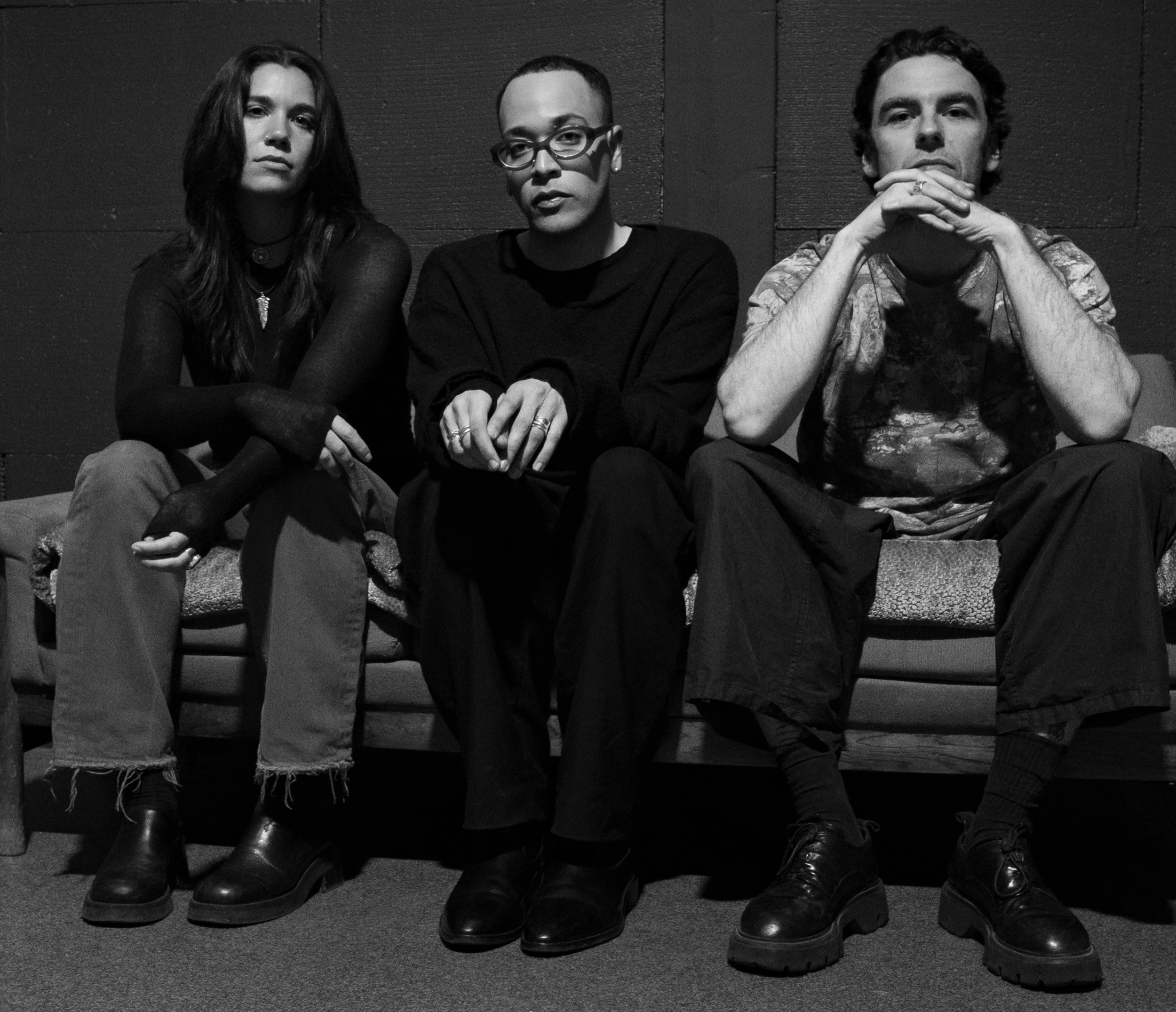
Photo: Marieke de Graaf.
This year's FIBER Festival theme, Fragile Forces, explores instability and sensitivity as forms of collective strength. How do you see these ideas resonating with your practices?
Zohar: Fragility feels very present in the way we work, both individually and together. We are approaching this from a queer perspective, and from a sensitive relationship to sound, community, and the environments we build around ourselves. That sensitivity is not separate from strength. It is part of how the work is held together.
There is also a particular fragility in the live setup itself. The instruments respond differently every time. The room changes things. Our bodies change things. Instead of hiding that instability, we want to work with it.
Castle: Crawler is built from pressure and sensitivity at the same time. Sub-bass can be physically overwhelming, but it can also be strangely intimate. Feedback can feel aggressive, but it can also reveal very delicate shifts in a room.
Fragility is not a weakness in the work. It is what allows the performance to stay alive. The machines are unstable, the voice is exposed, the audience is present, and the whole project is dependent on a desire to listen.
“A Sound Experiment is a chance to create a space where instability is not something to be fixed, but something to gather around.“
That is what draws us to bringing A Sound Experiment to FIBER. It is a chance to create a space where instability is not something to be fixed, but something to gather around. We hope people come ready to sit close, listen physically, and let the room shift around them. A fragile force can still shake the room.
Experience A Sound Experiment live on Saturday May 30th at de Brakke Grond.