Robin Koek & Jean-Emmanuel Rosnet present De glace et d’eau (2026)
he/him + he/him
May 28–31 | de Brakke Grond
“They say life flows like a river. What they don't say is that each drop carries whole stretches of the world with it.”
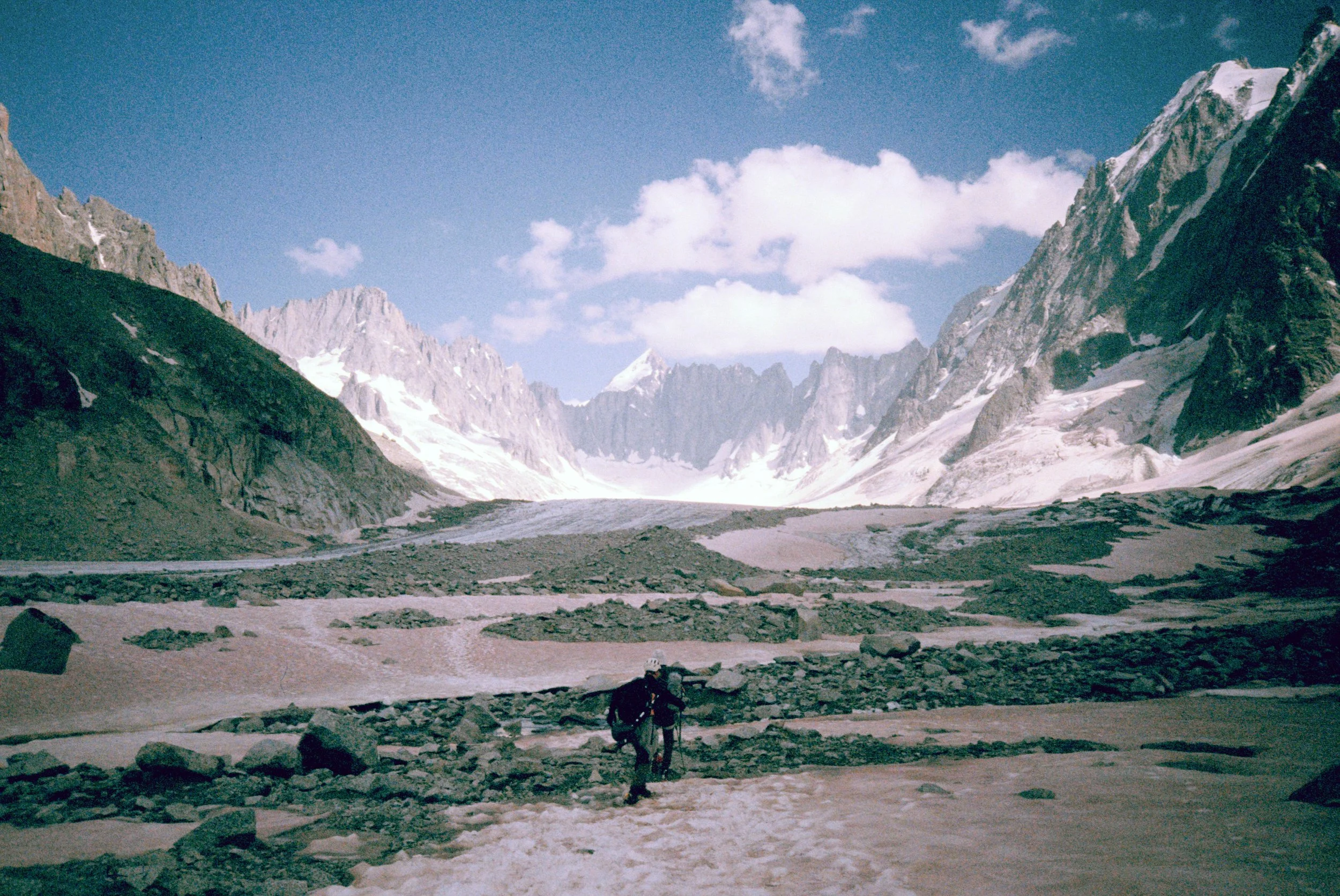
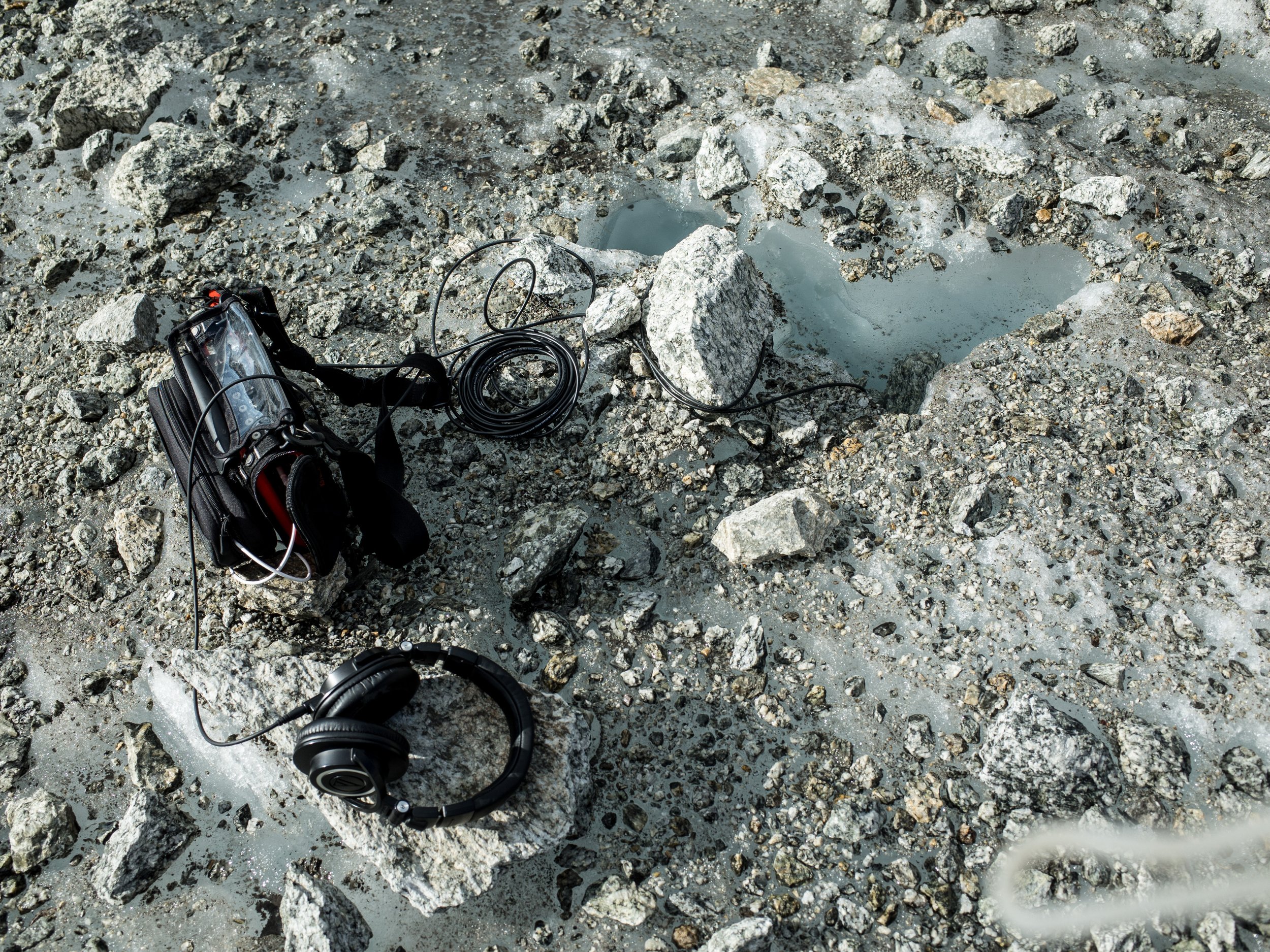
De glace et d'eau is an augmented sound fiction tracing the slow disappearance of a glacier through a lifetime of listening. A powerful text by Fanny Taillandier forms the narrative spine: the voice of a woman who has spent her life recording the glacier's creaks, silences, and subtle metamorphoses – arriving, finally, at what those recordings could never hold. Her life runs alongside geological time, and the distance between the two is the work's quiet subject. Visitors move through the space wearing headphones, the three-dimensional soundscape responding to the body. Field recordings made in situ are spatialised into layered acoustic cartographies that shift as you move, drawing the listener into a form of attentive presence that lingers between wonder and unease. The glacier emerges as both archive and witness: shaped by immense, ancient forces, and irreversibly vulnerable. To listen is to trace our own fleeting passage within something far older than memory.
De glace et d'eau was produced in collaboration with creative technology partner World Diffusion, developed using their full-scope augmented audio reality framework. The project is supported by Creative Fund NL and developed with residency support of Pléiades, Césaré and scientific advice by Institute of Geosciences of the Environment IGE.
Original French text: Fanny Taillandier
English interpretation: Laura Lot
Voice actor: Annija Krivjonoka
Development partners: iii Instrument Inventors | Césaré | Pléiades | FIBER
Scientific partners: IGE Institute of Environmental Geosciences (Grenobles, FR)
Technology partner: World Diffusion
Supported by Stimuleringsfonds
This work can only be viewed from 28 to 31 May at de brakke Grond, subject to a time-slot ticket. Time-slots can be booked via the link down below.
Jean-Emmanuel Rosnet works across composition, sound art, and radio, developing a practice that moves between field recording, installation, and augmented sound fiction. Drawing on techniques of collage and improvisation, he constructs multi-layered soundscapes shaped by voice, memory, and place. His artistic research focuses on orality and the collection of site-specific sound traces, forming sensitive archives that reflect on ecological transformation and the fragility of lived environments in the Anthropocene.
Robin Koek is a sound artist and designer exploring listening as a relational and more-than-human practice. Working across interactive installations and spatial sound, he creates immersive environments that extend studio-based approaches into collective, public experience. His research spans interspecies communication, aural heritage, and environmental connection, foregrounding sound as a shared resource while opening space for alternative forms of attention, empathy, and acoustic justice.
Robin Koek
Jean-Emmanuel Rosnet